Thane
08048032645
+919833841040
NDT Services

Radiographic Testing Iridium-192

In stockcod not available
Phone Number

08048032645

Please keep 0 before dialling the number.

Email Address info@indothermindia.com

Mon-Thu: 10 AM - 2 PM • Fri: 3 PM - 7AM

Address Plot No. A - 374, Road No. 9, Wagle Industrial Estate

Thane, India, 400604

Description

Radiographic Testing (RT) – Iridium-192 Radiographic Testing using Iridium-192 (Ir-192) is a non-destructive testing method that uses gamma radiation to examine the internal structure of materials, especially welds and thick sections, without causing damage. Why Iridium-192? Ir-192 is widely used because it: Produces high-energy gamma rays Is suitable for medium to thick materials Is portable, making it ideal for site work and field inspections Typical applications Weld inspection (butt welds, fillet welds) Pipelines Pressure vessels & boilers Structural steel Castings Oil & gas facilities Power plants Material thickness range Approx. 10 mm to 75 mm steel (Exact range depends on source strength and technique) Defects detected Internal cracks Porosity Slag inclusions Lack of fusion Lack of penetration Shrinkage defects RT (Ir-192) inspection process Job planning & safety assessment Source positioning (inside or outside the component) Placement of film / digital detector Radiation exposure using Ir-192 source Film processing or digital image capture Image interpretation by certified RT Level II / III Reporting & acceptance evaluation as per code Equipment used Ir-192 gamma source (projector / exposure device) Guide tubes & control cables Radiographic film or CR / DR system IQIs (Image Quality Indicators) Radiation survey meters Warning signs & barriers Codes & standards followed ASME Section V ASTM E94 / E1030 ISO 17636 API 1104 AWS D1.1 Client / project specifications Advantages ✔ Excellent for internal defect detection ✔ Works on thick sections ✔ Permanent inspection record (film/digital) ✔ Field-portable compared to X-ray Limitations ✖ Radiation safety requirements ✖ Requires controlled area ✖ Longer exposure times than X-ray ✖ Two-dimensional image only Safety considerations Licensed radioactive source Trained & certified radiographers Radiation barriers and exclusion zones Dosimeters & survey meters Compliance with local radiation authority regulations

Keywords

Other Products

view all

68179d65be22ee500d53ff54 Card 2

product image
Advance NDT Services

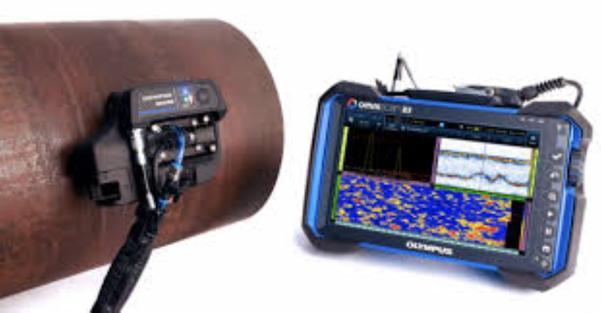
Advance NDT Services (Advanced Non-Destructive Testing Services) are specialized inspection techniques used to evaluate the quality, integrity, and safety of materials, components, and structures without causing any damage. These services are widely used in industries such as oil and gas, power plants, construction, manufacturing, aerospace, and heavy engineering where safety, reliability, and quality control are essential. Advanced NDT services utilize modern technologies and sophisticated equipment to detect hidden defects, cracks, corrosion, voids, and structural weaknesses in materials. By identifying these issues at an early stage, industries can prevent equipment failure, improve operational safety, and maintain compliance with international quality standards. Importance of Advance NDT Services Advance NDT services play a crucial role in ensuring the structural integrity and performance of industrial components. These inspection techniques help organizations maintain high-quality production standards while minimizing operational risks. Since the testing process does not damage the material, inspections can be performed on critical components while they are still in service. NDT services are essential for preventive maintenance, quality assurance, and safety inspections across various industrial sectors.

68179d65be22ee500d53ff54 Card 2

product image
Phased Array Ultrasonic Testing

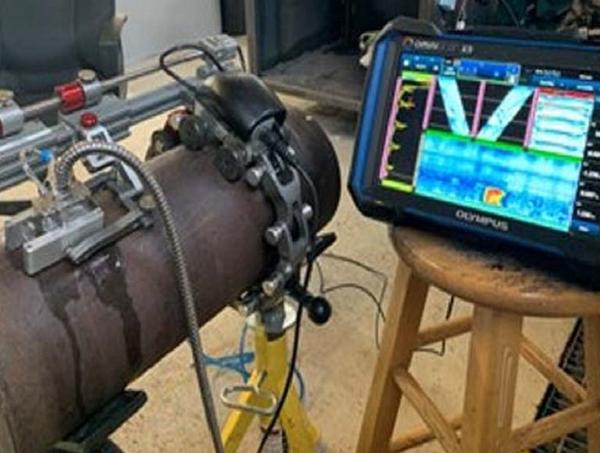
Phased Array Ultrasonic Testing offers unmatched precision for detecting and sizing internal defects. Its ability to inspect complex geometries, provide digital documentation, and reduce downtime makes it a preferred NDT method across industries. For organizations seeking advanced, accurate, and cost-effective inspection solutions, PAUT is the gold standard in ultrasonic testing technology.

68179d65be22ee500d53ff54 Card 2

product image
NDT Services

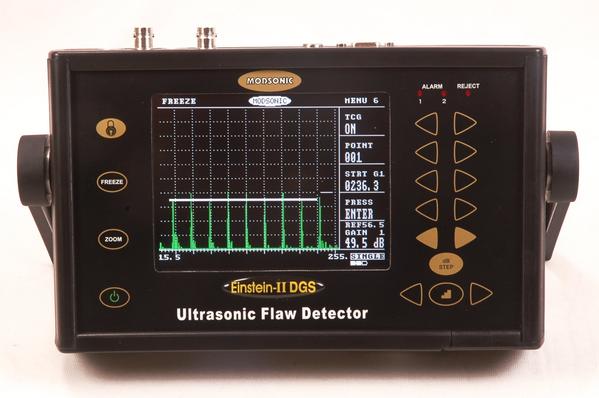
What is Ultrasonic Testing? In ultrasonic testing: Very high-frequency sound waves (usually 0.5–20 MHz) are sent into a material. These sound waves travel through the material. If they hit a defect (like a crack or void), part of the sound wave reflects back. The reflected signals are displayed on a screen and analyzed. ⚙️ Main Components of UT Transducer (Probe) – Generates and receives ultrasonic waves. Pulser/Receiver – Produces electrical pulses and receives signals. Couplant – Gel or liquid placed between probe and surface to help sound waves enter the material. Display Unit – Shows signals (echoes) for interpretation. 🛠 How It Works (Simple Steps) Apply couplant on the surface. Place the probe on the material. Sound waves travel inside the material. Waves reflect back from: Back wall (normal reflection) Internal flaws (cracks, porosity, inclusions) The machine calculates: Depth of defect Size of defect Material thickness 📌 Types of Ultrasonic Testing Pulse-Echo Method (most common) Through Transmission Phased Array Ultrasonic Testing (PAUT) Time of Flight Diffraction (TOFD) ✅ Advantages Detects internal defects High accuracy Can measure thickness No radiation hazard Immediate results ❌ Limitations Requires skilled operator Surface must be accessible Difficult on rough or irregular surfaces Couplant required 🏭 Applications Weld inspection Pipeline testing Aircraft components Pressure vessels Structural steel inspection