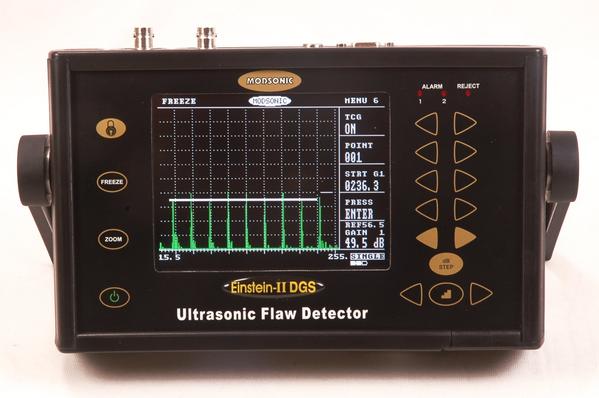
What is Ultrasonic Testing? In ultrasonic testing: Very high-frequency sound waves (usually 0.5–20 MHz) are sent into a material. These sound waves travel through the material. If they hit a defect (like a crack or void), part of the sound wave reflects back. The reflected signals are displayed on a screen and analyzed. ⚙️ Main Components of UT Transducer (Probe) – Generates and receives ultrasonic waves. Pulser/Receiver – Produces electrical pulses and receives signals. Couplant – Gel or liquid placed between probe and surface to help sound waves enter the material. Display Unit – Shows signals (echoes) for interpretation. 🛠 How It Works (Simple Steps) Apply couplant on the surface. Place the probe on the material. Sound waves travel inside the material. Waves reflect back from: Back wall (normal reflection) Internal flaws (cracks, porosity, inclusions) The machine calculates: Depth of defect Size of defect Material thickness 📌 Types of Ultrasonic Testing Pulse-Echo Method (most common) Through Transmission Phased Array Ultrasonic Testing (PAUT) Time of Flight Diffraction (TOFD) ✅ Advantages Detects internal defects High accuracy Can measure thickness No radiation hazard Immediate results ❌ Limitations Requires skilled operator Surface must be accessible Difficult on rough or irregular surfaces Couplant required 🏭 Applications Weld inspection Pipeline testing Aircraft components Pressure vessels Structural steel inspection
Thane
+919833841040
 Chat with us
 Chat with us